



Important Note: We recently initiated a new position in Invitation Homes (INVH) for our Retirement Portfolio and shared our initial thoughts in a trade alert that you can read by clicking here.
Since then, its share price has risen a little, but it still remains one of the best opportunities in today’s market, in our opinion. In today’s follow-up, we share a more detailed investment thesis, discussing the good and the bad, and explaining why we think that the company presents significant upside potential.
Invitation Homes Investment Thesis
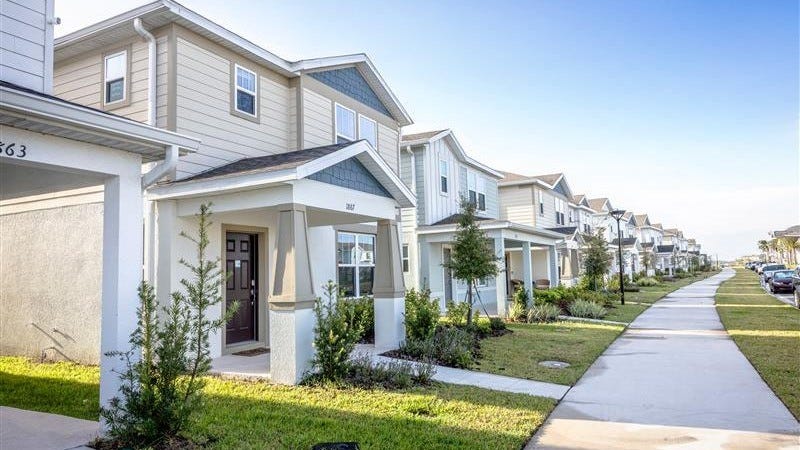
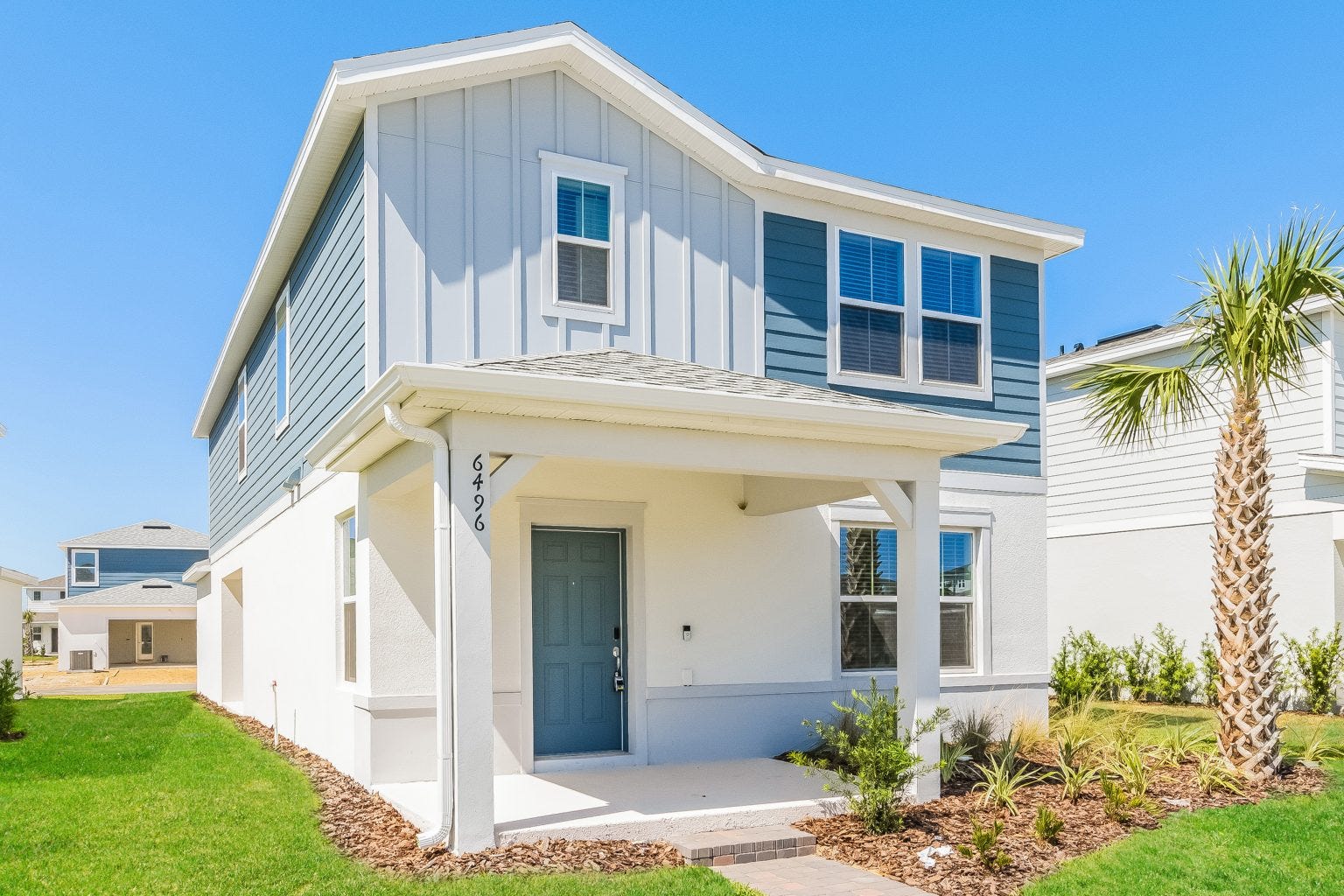
Invitation Homes (INVH) is one of the largest and most scaled landlord-operators of single-family rental homes in the United States, with over 80,000 homes under management.
Most of those homes are owned outright, while the rest are in joint ventures or INVH’s third-party management platform.
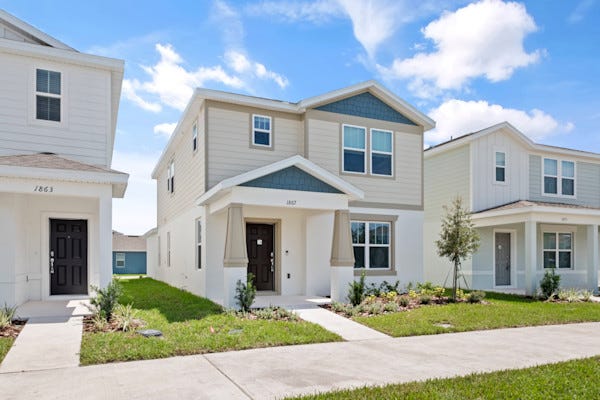
The REIT enjoys an investment-grade (BBB/BBB+) balance sheet and unique relationships with homebuilders. It also recently acquired ResiBuilt, a developer of build-to-rent homes in the Southeast with over 1,400 homes in development.
By all measures, INVH is a blue-chip company and industry leader in the single-family residential space.
And yet, because of low investor sentiment, INVH today trades at a ~30% discount to net asset value.
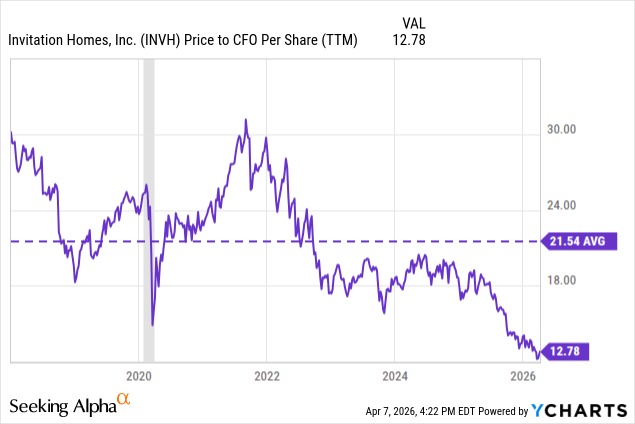
It also trades at a mere 13.1x FFO multiple, or roughly 15.5x AFFO.
This is close to its lowest valuation in company history:
The REIT now offers a dividend yield of 4.5%, which is well-covered at a payout ratio in the low-70% of AFFO area.
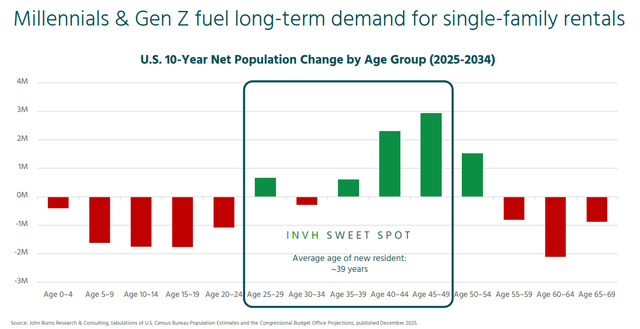
INVH boasts a strong occupancy rate of 96% with no slippage in the first few months of 2026, and single-family rentals have an attractive growth runway ahead from the combination of homebuying unaffordability and a demographic bulge of middle-aged Americans over the next decade.
So what’s the problem? Why is INVH’s stock price languishing and its valuation so low?
There are three headwinds that have pushed down investor sentiment right now. We will cover each one below.
Ultimately, though, we think the bad news has been thoroughly priced into INVH’s stock, leaving little to no downside (outside of a major recession).
We foresee at least 35% upside to fair value from here. And while we wait, INVH’s 4.5% yield pays us to wait, and we expect a return to mid-single-digit growth next year.
