



REITs have enjoyed a very strong start to 2026.
They have significantly outperformed the broader market, including the S&P500, and most other sectors.
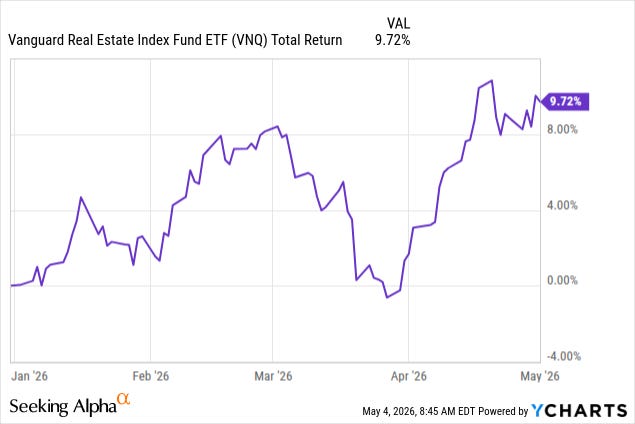
This has surprised many investors, but it should not.
A big part of this outperformance is driven by something that we have been discussing for a long time at High Yield Landlord: The rise of REITs as an “AI immunity” trade.

The Market Is Finally Catching On
Last summer, we warned that AI would not just create winners.
It would also destroy moats.
By breaking barriers to entry, AI leads to more competition, which ultimately compresses margins and reduces long-term profitability across many industries.
We are now seeing this play out in real time. Software companies, financial services, and other real asset-light sectors have already taken a hit as investors begin to question the durability of their earnings.
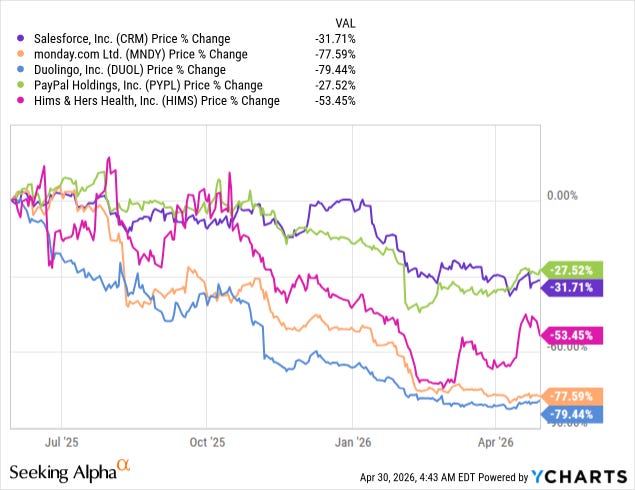
Meanwhile, capital is rotating elsewhere.
And now, for the first time, major institutional investors are starting to openly acknowledge this trend.
A recent memo from Hazelview Investments highlights exactly this shift. As they explain, AI has “widened the gap between perceived winners and losers,” triggering sell-offs in sectors exposed to disruption, while benefiting asset-heavy sectors like real estate and REITs, to be more specific.
REITs Are Emerging as Early Winners
The data supports this.
According to Hazelview’s report, global REITs delivered double-digit returns in early 2026, outperforming both global equities and the S&P 500.
At the same time:
Software stocks sold off sharply
The iShares Expanded Tech-Software ETF (IGV) fell by 24% in Q1
Capital flows into REIT funds finally turned positive
This is not random. It is a rotation trade. Investors are reallocating capital away from businesses with uncertain long-term cash flows and toward those with more predictable, durable income streams that AI cannot disrupt.
The “AI Immunity” Thesis Explained
Hazelview refers to this as the “HALO” trade, short for:
Heavy Assets
Low Obsolescence
These businesses share key characteristics:
Significant physical capital
High barriers to entry
Durable economic relevance
REITs fit this perfectly. Their assets are constrained by:
Location
Zoning
Permits
Construction costs
Infrastructure limitations
You cannot replicate prime real estate with AI. That alone makes it fundamentally different from most digital businesses.
Moreover, the demand for these properties is sustainable, and their cash flows are backed by contractual leases, often with long durations and built-in rent escalators.
Real Estate Has a Structural Advantage
One of the most important points in the memo is this:
For AI to disrupt REITs, it would need to reduce the need for physical space itself, but that is very unlikely.
People still need:
Housing
Logistics
Warehouses
Storage
Healthcare facilities
Retail locations
Hotels
Billboards
Timberland and farmland
Cannabis cultivation facilities
Cell towers
Data centers
Etc.

Even in a highly digital world, demand remains physical.
That alone gives REITs a structural advantage.
But it goes even further. In many cases, AI is not just neutral to real estate demand. It could increase it:
Data centers: AI requires enormous computing power, which drives unprecedented demand for data storage and processing infrastructure.
Cell towers: more AI usage means more data consumption, requiring denser and more advanced wireless networks.
Industrial real estate: AI accelerates e-commerce through better online marketing personalization and lower costs, especially as autonomous delivery reduces logistics costs.
Self-storage: AI lowers barriers to entry for small businesses, increases job mobility, and supports entrepreneurship, all of which drive storage demand.
Life science real estate: AI accelerates drug discovery and research, leading to more biotech formations and greater demand for lab space.
Timberland: AI drives massive electricity demand, accelerating renewable energy buildout, increasing land values, and boosting demand for timber due to rising infrastructure and construction activity
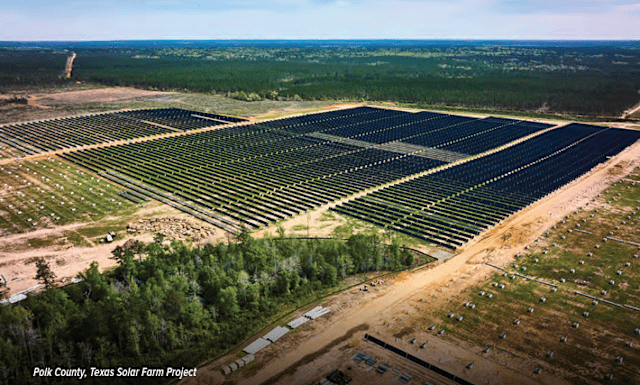
In other words, many property sectors are not just protected. They are direct beneficiaries.
That is why REITs benefit from what I would call a real asset moat.
Hazelview highlights that this combination of contractual income and physical scarcity makes REIT cash flows far more predictable than those of many AI-exposed sectors.
But This Is Just the Beginning
Here is where I think the opportunity is even bigger than what their report suggests.
So far, the damage has been felt mainly by digital businesses like SaaS companies, which were the first to get hit because they are the easiest to replicate. We have already seen significant value destruction there as investors wake up to the reality that AI does not just boost productivity, it also breaks barriers to entry and invites much greater competition.
But this is likely just the first domino.
Over time, I expect similar pressure to spread to most businesses and sectors.
Professional service firms could suffer as AI makes legal work, accounting, consulting, marketing, and everything else far cheaper and easier to offer, allowing more people to go independent and compete, leading to more supply, even as demand also gets destroyed as people can handle more of these things on their own.
Education could face disruption as AI tutors become more effective, more personalized, and much cheaper than traditional classrooms.
Healthcare could increasingly feel pressure as AI answers basic medical questions, reads scans, and eventually assists with more complex care, performing even surgeries with greater precision.
Retail and consumer brands could suffer as AI makes it easier to launch online stores, compare products, optimize marketing, and push consumers toward cheaper and better alternatives. The value of brands could then decline.
Entertainment could face rising competition as movies, games, and content become far cheaper to produce and more personalized.
Transportation could also come under pressure as autonomous vehicles disrupt logistics businesses and reduce the need to own a personal vehicle.
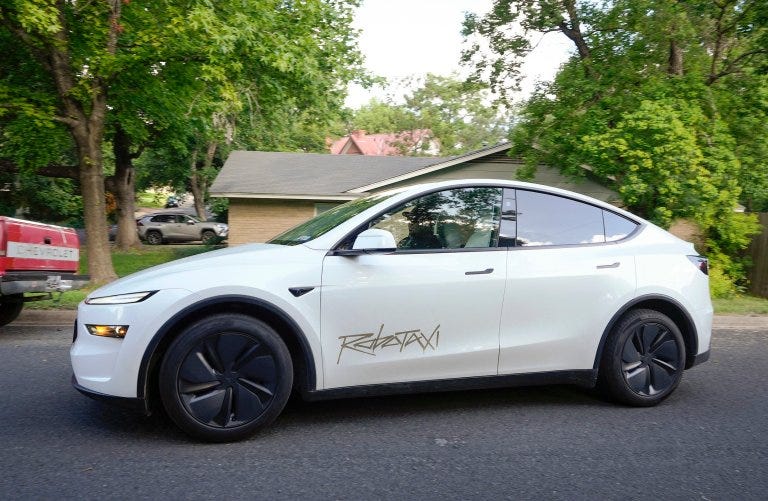
That is the key point. AI lowers barriers to entry across the economy and commoditizes businesses. That means more competition, weaker pricing power, lower margins, and less predictable earnings for a very large share of the market.
Businesses that are immune, or that directly benefit from AI, will be the exception, not the rule.
Think about what happens next:
Profitability declines
Earnings become less predictable
Valuation multiples compress
At the same time:
Investors increasingly prioritize wealth preservation
Demand rises for stable, income-producing assets
Capital flows into REITs and other real assets accelerate
This is not just a short-term trade. It could become a multi-year structural shift in capital allocation.
