


Public REITs are being acquired at substantial premiums, yet buyers often still appear to be purchasing the underlying real estate at attractive valuations.
For several years, we have argued that REITs are undervalued relative to the value of the properties they own.
Public REIT share prices collapsed as interest rates surged, but private real estate values generally held up much better. This created unusually large discounts between the valuations assigned to properties in the public and private markets.
The market may debate the precise value of a REIT’s assets, but private buyers are now putting real money behind our thesis.
And we are no longer talking about one or two isolated transactions.
Buyout activity has accelerated across practically every major property sector, including:
Apartments
Industrial properties
Self-storage facilities
Shopping centers
Healthcare properties
Life science buildings
It is also happening across multiple countries, including the United States, Canada, the United Kingdom, and Australia.
In just the first quarter of 2026, five acquisitions of listed REITs were announced with an aggregate transaction value of approximately $26.1 billion, including assumed debt. By comparison, just five REIT M&A deals were completed during the entirety of 2025, representing $14.4 billion of value.
Meanwhile, the median U.S. REIT still traded at a nearly 20% discount to consensus net asset value at the end of the first quarter. The targets involved in the early-2026 deals were generally among the REITs trading at particularly large discounts.
This is important because private equity firms, pension funds, sovereign wealth funds, and large strategic REITs are typically among the best-informed buyers of real estate.
They have access to detailed property-level information, proprietary transaction data, financing relationships, and teams of professionals who spend their entire careers valuing real estate.
Today, many of these sophisticated investors appear to be reaching the same conclusion: The public REIT market is offering better value than the private real estate market.
Below is a recap of all the REIT buyouts we have seen over the past year. After that, I will discuss what this means for the REIT industry and investors going forward:
Two Important Precursors From Late 2025
Before reviewing the 2026 deals, two transactions that are often associated with the current wave should be clarified.
First, Australia’s National Storage REIT agreed in December 2025 to be acquired by a consortium led by Brookfield and GIC for approximately A$4 billion. The A$2.86-per-security offer represented a roughly 26% premium to the unaffected share price. The transaction was completed, and the REIT was delisted, in April 2026.
Second, Blackstone explored a potential takeover of the United Kingdom’s Big Yellow Group in late 2025. However, discussions ended in December without a formal offer. It was still another indication that private capital was actively evaluating listed self-storage portfolios.
Neither transaction was technically announced in 2026, but both helped set the stage for what followed.
The 2026 REIT Buyout Timeline
January 5: Minto Apartment REIT
Buyer: Crestpoint Real Estate Investments and the Minto Group
Buyer type: Private real estate investment manager and the REIT’s original sponsor
Transaction value: Approximately C$2.3 billion, including debt
Premium: 32% to the previous closing price
The year began with Canadian apartment landlord Minto Apartment REIT agreeing to be taken private.
Crestpoint Real Estate Investments partnered with an affiliate of the Minto Group to offer C$18 in cash for each Minto unit. This represented a substantial 32% premium to the REIT’s previous closing price.
The transaction was particularly noteworthy because apartments are generally viewed as one of the highest-quality and most defensive real estate sectors.
The properties were not facing technological obsolescence or a structural collapse in demand. Rather, the public market had simply assigned the REIT a valuation that allowed a private buyer to pay a large premium while still finding the transaction attractive.
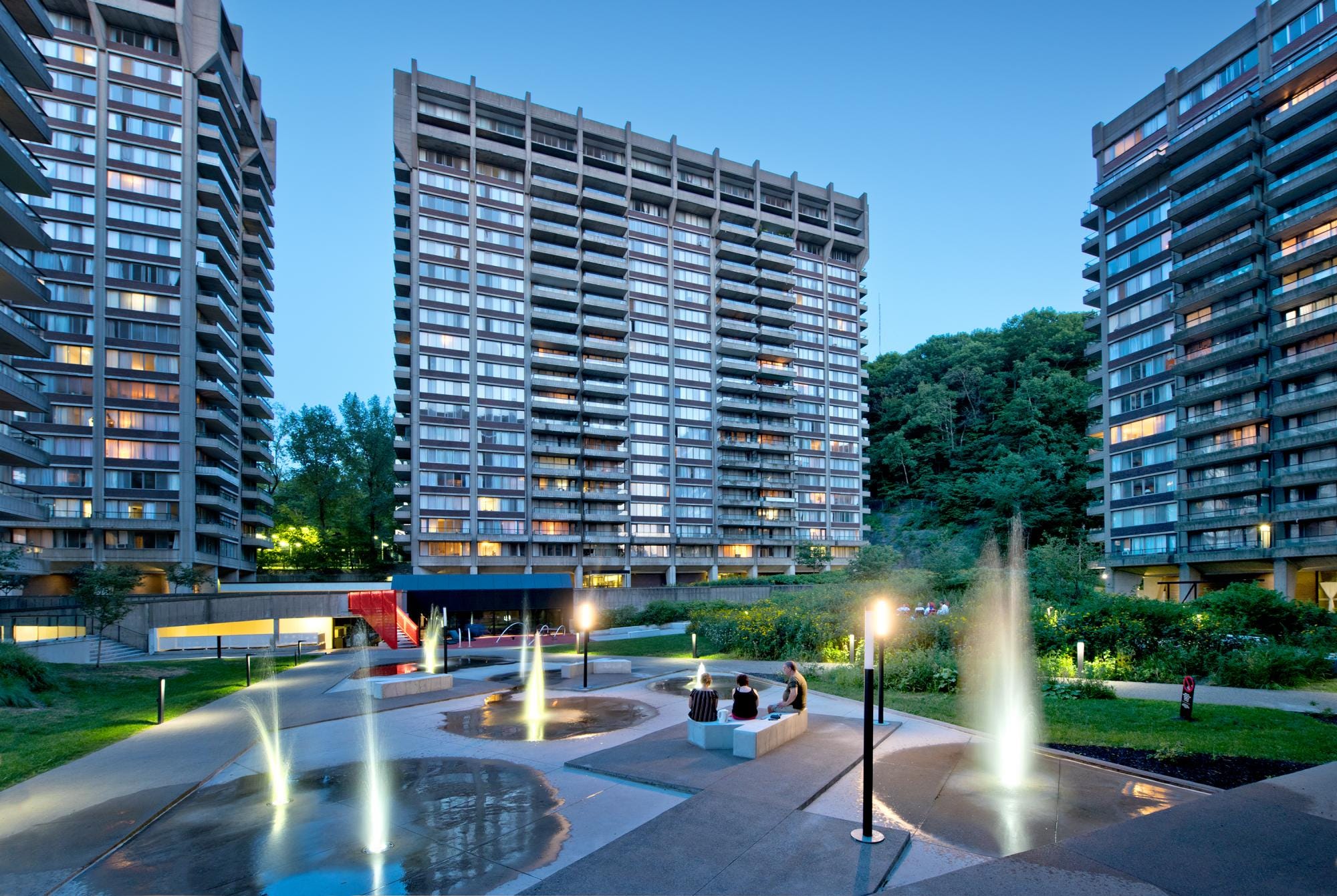
January 28: Life Science REIT
Buyer: British Land
Buyer type: Publicly listed REIT
Transaction value: Approximately £150 million
Premium: 21% to the previous closing price
Discount to asset value: Approximately 26% below EPRA net tangible assets
British Land then agreed to acquire the United Kingdom’s Life Science REIT through a combination of cash and British Land shares.
The offer valued Life Science REIT at 42.8 pence per share, representing a 21% premium to its unaffected closing price and a 15% premium to its three-month volume-weighted average price.
But here is the most important detail:
Even after paying this substantial premium, British Land was acquiring Life Science REIT at an approximately 26% discount to its EPRA net tangible asset value.
This perfectly illustrates the disconnect that exists today.
Public shareholders receive a large premium and may feel that they got a good deal. Yet the buyer can simultaneously acquire the underlying real estate at a significant discount to its estimated value.
Both sides can win because the starting public-market valuation was simply too low.
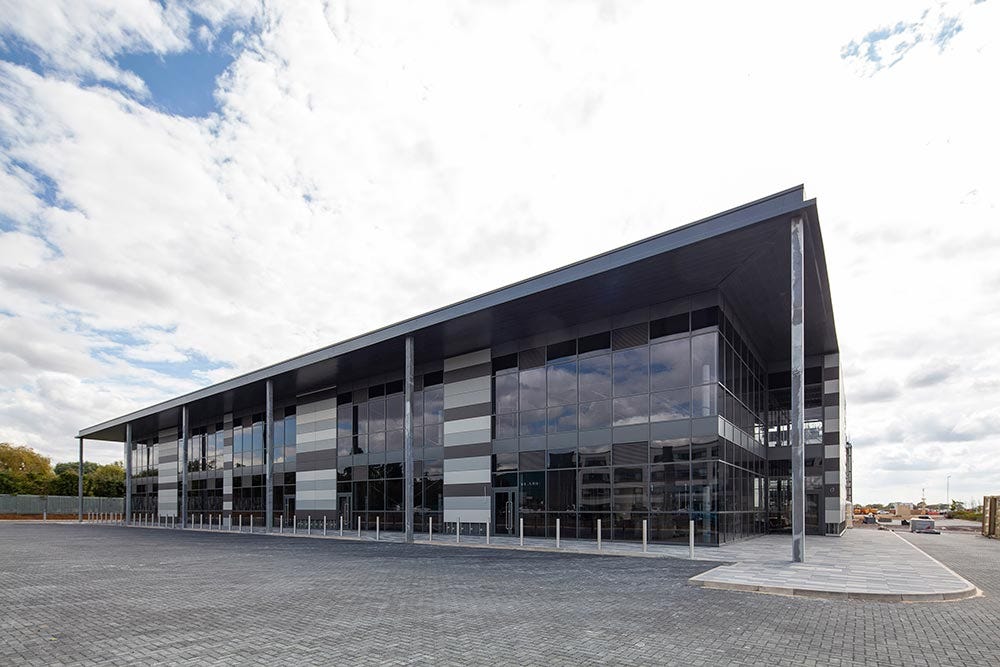
February 2: Peakstone Realty Trust
Buyer: Brookfield
Buyer type: Private real estate fund managed by a global alternative asset manager
Transaction value: Approximately $1.2 billion
Premium: 34.4% to the previous closing price
Status: Completed in May 2026
Next came Peakstone Realty Trust.
Brookfield agreed to acquire the industrial REIT for $21 per share in cash, representing a 34.4% premium to Peakstone’s prior closing price. The transaction valued the company at approximately $1.2 billion and was completed in May.
Brookfield is one of the world’s largest and most sophisticated real estate investors. It understands replacement costs, leasing conditions, capital requirements, and private-market valuations better than almost anyone.
It is therefore meaningful that Brookfield concluded that buying an entire listed industrial REIT was more attractive than assembling a comparable portfolio one property at a time in the private market.

February 23: Veris Residential
Buyer: A consortium led by Affinius Capital and Vista Hill Partners, with GIC
Buyer type: Private real estate managers and a sovereign wealth fund
Transaction value: Approximately $3.4 billion, including debt
Premium: 23.2% to the unaffected price and 27.5% to the 30-day average price
Apartment REIT Veris Residential then agreed to be acquired for $19 per share in cash.
The consortium included Affinius Capital, Vista Hill Partners, and Singapore sovereign wealth fund GIC. The offer represented a 23.2% premium to Veris’ unaffected share price before reports of a possible sale and a 27.5% premium to its 30-day volume-weighted average price.
Again, the buyers were not inexperienced speculators.
GIC is one of the largest institutional real estate investors in the world, while Affinius and Vista Hill are specialist real estate investment managers.
They were willing to commit billions of dollars to acquire an apartment portfolio from the public market at a substantial premium.

March 16: National Storage Affiliates Trust
Buyer: Public Storage
Buyer type: Publicly listed REIT and strategic buyer
Transaction value: Approximately $10.5 billion
Premium: Approximately 34.7%
Status: Scheduled to close end of July, subject to customary conditions
The next deal was one of the largest of the year.
Self-storage giant Public Storage agreed to acquire National Storage Affiliates Trust, or NSA, in an all-stock transaction valued at approximately $10.5 billion.
NSA shareholders are set to receive 0.14 Public Storage shares for each NSA share, which initially implied a value of approximately $41.68 per share and a 34.7% premium.
This transaction is especially important because the buyer is itself a publicly traded REIT with extensive operating experience.
Public Storage knows the NSA portfolio, operating platform, development economics, and self-storage market extremely well. It still concluded that acquiring the entire company at a substantial premium was an attractive use of its capital.
This was not a private equity buyer making an aggressive macro bet, looking to earn fees. It was the industry’s largest operator buying one of its listed peers.

April 9: Whitestone REIT
Buyer: Funds managed by Ares Management
Buyer type: Private alternative asset manager
Transaction value: Approximately $1.7 billion
Premium: 12.2% to the previous closing price and 26.5% to the unaffected price
Ares subsequently agreed to acquire shopping-center landlord Whitestone REIT for $19 per share in cash.
The offer represented a 12.2% premium to Whitestone’s closing price immediately before the announcement. However, the more relevant comparison is the unaffected price before reports emerged that the company was exploring a sale. On that basis, the premium was approximately 26.5%.
Whitestone owns open-air, service-oriented shopping centers in fast-growing Sunbelt markets such as Phoenix, Austin, Dallas, Houston, and San Antonio.
For years, public investors assigned low valuations to smaller shopping-center REITs, partly because of concerns about retail real estate and partly because smaller REITs generally trade at discounts due to their limited scale and liquidity.
Ares evidently saw the situation differently.
It recognized that necessity- and service-oriented retail centers in supply-constrained markets can generate durable cash flow and attractive long-term rent growth.

April 16: First Capital REIT
Buyer: KingSett Capital and Choice Properties REIT
Buyer type: Private real estate capital partnered with a public REIT
Transaction value: Approximately C$9.4 billion
Premium: 12% to the previous closing price, 17% to the 20-day average price, and 8% above reported NAV
Canadian shopping-center landlord First Capital REIT then agreed to be acquired by KingSett Capital and Choice Properties REIT.
First Capital investors are set to receive C$19.24 in cash and 0.3186 Choice Properties units for each First Capital unit. At announcement, this represented total consideration of C$24.40 per unit.
The offer represented:
A 12% premium to the previous closing price
A 17% premium to the 20-day volume-weighted average price
A 21% premium to the 90-day average price
An 8% premium to First Capital’s reported net asset value
Choice Properties is acquiring approximately C$5 billion of necessity-based neighborhood shopping centers, while KingSett is acquiring approximately C$4.4 billion of other assets and First Capital’s outstanding units.
This transaction is notable because the buyers were willing to pay above reported NAV.
It suggests that the highest-quality grocery-anchored and necessity-oriented retail assets may be worth at least as much as, or potentially more than, the values carried on REIT balance sheets.

April 20: Sila Realty Trust
Buyer: Affiliates of Blue Owl Real Estate Capital
Buyer type: Private alternative asset manager
Transaction value: Approximately $2.4 billion
Premium: 19% to the previous closing price and 25.6% to the 30-day average price
Status: Completed in July 2026
Blue Owl then agreed to acquire healthcare-focused Sila Realty Trust for $30.38 per share in cash.
The offer represented a 19% premium to Sila’s previous closing price and a 25.6% premium to its 30-day volume-weighted average price. The transaction valued the company at approximately $2.4 billion and was completed on July 1.
Sila owns a diversified portfolio of healthcare properties.
Healthcare real estate can be operationally complex, and property quality varies significantly from one asset to another. Blue Owl had the resources to conduct extensive property-level due diligence and still concluded that purchasing the company at a substantial premium offered an attractive return.

May 12: Picton Property Income
Buyer: LondonMetric Property and Schroder Real Estate Investment Trust
Buyer type: Two publicly listed UK REITs
Transaction value: Approximately $546 million
Premium: Approximately 7% to the previous closing price
In May, two British REITs agreed to acquire Picton Property Income in an all-share transaction.
Picton shareholders are set to receive a combination of LondonMetric and Schroder REIT shares worth approximately 78.2 pence for each Picton share at announcement. This represented a roughly 7% premium to Picton’s previous closing price.
The premium was smaller than in many privatizations, which is typical for public-to-public mergers.
However, the deal still contributes to the broader consolidation trend. Three listed companies will effectively become two, reducing the number of separate REIT investment opportunities available in the UK market.

May 21: AvalonBay Communities and Equity Residential
Transaction: Merger of equals
Buyer type: Public-to-public REIT consolidation
Combined enterprise value: Approximately $69 billion
Premium: No conventional takeover premium
The largest REIT transaction of the year was the announced merger between apartment giants AvalonBay Communities and Equity Residential.
The all-stock merger is expected to create the largest publicly traded U.S. apartment REIT, with a combined enterprise value of approximately $69 billion and more than 180,000 apartment units.
AvalonBay shareholders are set to receive 2.793 Equity Residential shares for each AvalonBay share and will own approximately 51.2% of the combined company. Equity Residential shareholders will own the remaining 48.8%.
Because this was structured as a merger of equals, there was no conventional cash takeover premium.
It also differs from the privatizations discussed above. The properties will remain publicly listed, and the aggregate amount of publicly traded REIT equity will not disappear.
Still, the transaction materially reduces the number of large apartment REITs available to investors.
It is another example of the sector consolidating into a smaller number of larger and more efficient platforms.

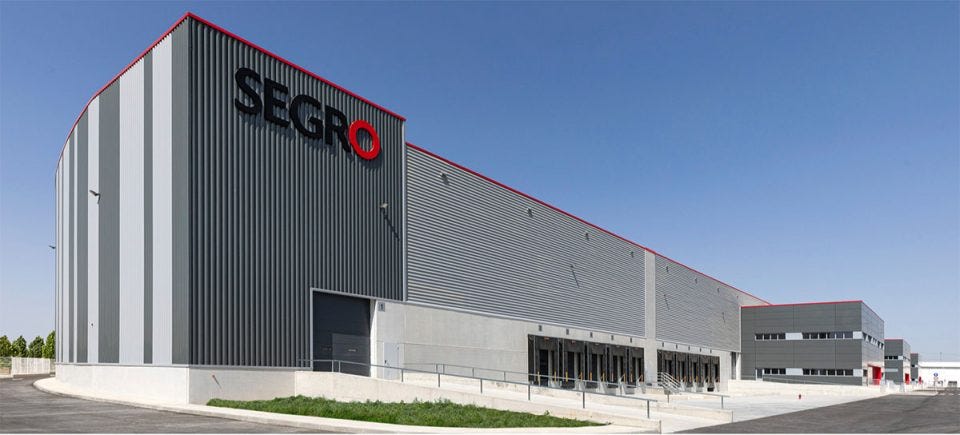
June 24 / July 22: Prologis Approaches SEGRO And Submits Best And Final Proposal
Potential buyer: Prologis
Buyer type: Publicly listed REIT and strategic buyer
Latest proposed value: Approximately £14.0 billion, or 1,031.7 pence per SEGRO share
Latest proposed premium: Approximately 39% to SEGRO’s pre-bid price and 14% above its latest pro forma adjusted NAV
Status: Best and final proposal submitted on July 22, following three prior proposals that had been rejected
In June, Prologis publicly disclosed that it had approached European industrial landlord SEGRO regarding a potential acquisition.
Its initial publicly disclosed proposal valued SEGRO at 925 pence per share, representing a 24.6% premium to SEGRO’s unaffected closing price.
Prologis later improved the terms. Its third proposal valued SEGRO at approximately 993 pence per share, or £13.5 billion in total. This reportedly represented a roughly 34% premium to SEGRO’s price before the approach became public and approximately 10% above its estimated net asset value.
SEGRO rejected the improved proposal, arguing that it continued to undervalue the company and its development platform.
But Prologis has now returned with what it calls its “best and final” proposal. The latest proposal values SEGRO at 1,031.7 pence per share, or approximately £14.0 billion in total. This represents a 39% premium to SEGRO’s unaffected closing price and a 14% premium to its latest pro forma adjusted NAV.
The proposed consideration consists primarily of Prologis shares, with a partial cash alternative of up to £3.5 billion, representing 25% of the total consideration.
The fact that Prologis continued to increase its offer strengthens the bullish signal.
Prologis is the world’s largest industrial property company. It possesses vast amounts of market data and has direct visibility into leasing, replacement costs, development economics, and asset values on both sides of the Atlantic.
Prologis clearly believes that acquiring SEGRO, even at a premium to its reported NAV, could create attractive long-term value.
Meanwhile, SEGRO’s board has so far resisted these approaches, arguing that the proposals undervalue the company and its long-term growth prospects.
Both sides appear to agree on one central point:
European industrial real estate is worth considerably more than SEGRO’s unaffected public-market valuation suggested.
July 20: LXP Industrial Trust
Buyer: Brookfield and CPP Investments
Buyer type: Global alternative asset manager and institutional pension fund
Transaction value: Approximately $5.2 billion, including net debt and preferred equity
Premium: 4.6% to the previous closing price, 12.3% to the 30-day average, and 19.8% to the 90-day average
Status: Definitive agreement with a 40-day go-shop period
Most recently, Brookfield returned for another industrial REIT.
Brookfield and the Canada Pension Plan Investment Board agreed to acquire LXP Industrial Trust for $61.20 per share in cash. The transaction values LXP at approximately $5.2 billion, including net debt and preferred equity.
The headline premium was only 4.6% to LXP’s closing price immediately before the announcement, but the stock had already appreciated substantially.
The price represented a 12.3% premium to LXP’s 30-day volume-weighted average price and a 19.8% premium to its 90-day average price. The agreement also includes a 40-day go-shop period during which LXP can seek a superior offer.
This is Brookfield’s second acquisition of a listed U.S. industrial REIT in 2026, following Peakstone.
That is unlikely to be a coincidence.
Brookfield appears to believe that public industrial REITs provide a cheaper and faster way to acquire scaled logistics portfolios than competing for individual properties in the private market.
What Are These Buyers Telling Us?
No single acquisition proves that the entire REIT sector is undervalued.
A buyer may identify company-specific synergies, believe that it can operate the properties more efficiently, or have a lower cost of capital than the target.
But when the same pattern repeatedly occurs across different property sectors, geographies, and buyer types, it becomes much harder to dismiss.
Consider who is acquiring or attempting to acquire these companies:
Brookfield
Ares
Blue Owl
GIC
CPP Investments
Crestpoint
KingSett
Public Storage
British Land
Prologis
Choice Properties
LondonMetric
Schroder REIT
These are not unsophisticated buyers chasing speculative assets.
They are among the largest and most experienced real estate investors in the world.
Moreover, many are paying premiums of 20%, 30%, or even closer to 40% to acquire these REITs.
Yet in many cases, they are still buying the assets at or below estimated private-market values.
Life Science REIT is perhaps the clearest example. British Land offered shareholders a 21% premium, yet it was still acquiring the company at a 26% discount to reported net tangible asset value.
Buyouts Provide Real Price Discovery
One of the challenges with valuing REITs is that net asset value estimates are ultimately estimates.
Analysts can debate the appropriate cap rate, replacement cost, development value, or private-market value of a portfolio.
An actual acquisition is different.
It represents a real buyer committing real capital after conducting extensive due diligence.
Every completed transaction therefore provides another private-market comparable for the remaining REITs.
When Public Storage agrees to pay a large premium for National Storage Affiliates, investors must reconsider whether the other self-storage REITs are also undervalued.
When Brookfield acquires two industrial REITs and Prologis pursues SEGRO, investors must reconsider whether listed industrial portfolios are being priced too cheaply.
When Minto and Veris are taken private, the implied values of other apartment portfolios become harder to ignore.
The deals gradually force public-market investors to update their valuation assumptions.
The Supply of Public REITs Is Shrinking
Buyouts also affect the supply-and-demand balance of the REIT market.
When a private buyer acquires a REIT, the company’s shares disappear from the public market.
Its former shareholders receive cash and need to decide where to reinvest it. Some will leave the sector, but many dedicated REIT investors, real estate funds, and income-oriented investors will redeploy at least part of the proceeds into other REITs.
The same amount of potential capital is then chasing a smaller selection of publicly listed companies.
Public-to-public mergers work somewhat differently. They do not eliminate the same amount of public equity because shareholders generally receive shares in the combined company. However, they still reduce the number of independent REITs available for investment and concentrate index and active-fund allocations in fewer companies.
This is not merely theoretical.
The number of listed U.S. REITs declined from 223 at the end of 2020 to approximately 189 in 2026. At the same time, aggregate market capitalization increased from roughly $1.2 trillion to $1.6 trillion, and the average listed REIT grew from approximately $6.5 billion to $8.7 billion.
The sector is becoming larger but more concentrated.
This could become especially important as investor sentiment continues to recover.
When capital was leaving REIT funds, the reduction in supply received little attention because demand was weak.
But as fund flows improve, institutional allocations recover, and generalist investors return to the sector, they will be competing to buy a smaller number of remaining REITs.
That should increase the scarcity value of high-quality public real estate platforms.
Bottom Line
The recent transactions are not isolated events.
Through July 27, we can identify at least 11 major agreed REIT transactions in 2026, in addition to Prologis’ live attempt to acquire SEGRO and the major late-2025 transactions that closed or influenced the market this year.
The targets include apartments, shopping centers, industrial properties, self-storage facilities, healthcare assets, and life science buildings.
The buyers include private equity firms, pension funds, sovereign wealth funds, and some of the world’s largest REITs.
They are frequently paying double-digit premiums, yet in many cases, the acquired properties still appear attractively valued relative to private-market comparables or reported NAV.
This tells us three things.
First, public REIT valuations remain sufficiently low to attract some of the world’s most sophisticated real estate investors.
Second, each acquisition creates new price discovery that can help close the valuation gap for comparable REITs.
Third, privatizations and mergers are steadily reducing the number of listed REITs, potentially concentrating recovering investor demand in a smaller pool of remaining companies.
The public market can ignore underlying property values for a while.
But eventually, private buyers step in and take advantage of the discrepancy.
That is precisely what is happening today, and it is one of the strongest positive signals we have seen for the REIT sector in years.
Finally, please note that we have exceptionally posted this article without a paywall. If you found it valuable, consider joining High Yield Landlord for a 2-week free trial.
We expect to share a Trade Alert with our paid members tomorrow, and by starting your free trial today, you will also gain access to it. You will also get immediate access to my entire REIT portfolio, our exclusive REIT CEO interviews, and much more. We are the largest and highest-rated REIT investment newsletter online, with over 2,000 paid members and more than 500 five-star reviews.
We spend thousands of hours and over $100,000 per year researching the market for the most profitable investment opportunities, and we share the results with you at a tiny fraction of the cost.
Get started today - the first 2 weeks are on us:
Analyst’s Disclosure: I/we have a beneficial long position in the shares of all companies held in the CORE PORTFOLIO, RETIREMENT PORTFOLIO, and INTERNATIONAL PORTFOLIO either through stock ownership, options, or other derivatives. We also own a position in FarmTogether. High Yield Landlord® (’HYL’) is managed by Leonberg Research, a subsidiary of Leonberg Capital. All rights are reserved. No recommendation or advice is being given as to whether any investment is suitable for a particular investor. The newsletter is impersonal and subscribers/readers should not make any investment decision without conducting their own due diligence, and consulting their financial advisor about their specific situation. The information is obtained from sources believed to be reliable, but its accuracy cannot be guaranteed. The opinions expressed are those of the publisher and are subject to change without notice. We are a team of five analysts, each contributing distinct perspectives. Nonetheless, Jussi Askola, the leader of the service, is responsible for making the final investment decisions and overseeing the portfolio. We do not always agree with each other, and an investment by Jussi should not be taken as an endorsement by other authors. Past performance is no guarantee of future results. Our portfolio performance data is provided by Interactive Brokers and believed to be accurate but its accuracy has not been audited and cannot be guaranteed. Our portfolio may not be perfectly comparable to the relevant index. It is more concentrated and may at times use margin and/or invest in companies that are not typically included in REIT indexes. Finally, High Yield Landlord is not a licensed securities dealer, broker, US investment adviser, or investment bank. We simply share research on the REIT sector.

And you didn't even mention the WDP Argan merger in continental Europe.
Which other REITs do you see being taken private?