
This is an excellent “buy the dip” opportunity for REITs.
As we explained in a recent Market Update, “the source of the [inflation] problem is not structural. It is a geopolitical energy shock.”
Up until recently, the market had been pricing in an extended Fed pause — in other words, that the Federal Reserve would keep its key policy rate flat through the geopolitical turmoil and energy shock. Then, over the span of a few months, that outlook shifted toward multiple rate hikes through the remainder of 2026.
Paradoxically, this makes us even more bullish on REITs as a long-term investment.
This is for two key reasons:
Higher interest rates further delay the recovery in construction pipelines while acting as only a minimal headwind to cash flows. The net effect is positive, because low supply growth matters more than slowly rising interest expenses, especially for modestly leveraged REITs.
The current inflationary environment remains overwhelmingly oil-driven, which means that it is highly likely to be... transitory.
These two points come together to create an optimal buying opportunity for REITs. The market is pricing in “higher for longer” interest rates, even though inflation and rates are likely to come down over the next few years. Meanwhile, the market isn’t pricing in any of the benefits of a constricted development pipeline.
Let’s first look at the point that this inflationary surge is overwhelmingly oil-driven.
Rising CPI Is Still Fueled By Oil
There are many ways to measure consumer inflation. The headline CPI rate is perhaps the primary way people refer to inflation in the US, but one could also exclude the volatile food and energy components of the CPI via the “core CPI” metric. That latter metric is particularly useful today, because it omits all oil-related items and thereby gives a view of consumer prices outside of the obvious oil shock.
While the headline CPI continues running hot, core CPI has actually resumed its disinflationary trajectory:
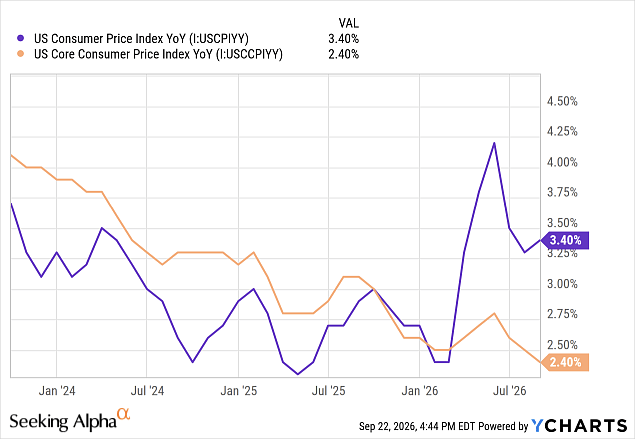
The Cleveland Fed’s Inflation Nowcast projects that September 2026 inflation will still be around 3.5% for headline CPI and 2.4% for core CPI.
In other words, outside of the energy category, the pre-Iran war disinflationary trend remains in place. Although there are concerns that higher oil prices (especially for diesel, a critical input for goods transportation) will eventually trickle into higher prices of non-energy items, there is very little evidence of that happening at this time.
Businesses don’t raise prices the moment some of their volatile input costs go up. Aside from pass-through products like oil-to-gasoline, consumer price hikes tend to be done when businesses believe their customers will absorb them without demand destruction.
But today, with gasoline prices high and the personal savings rate at an ultra-low 3%, the American consumer is scarcely able to absorb non-energy price increases without demand destruction.
Here’s the table showing CPI categories:
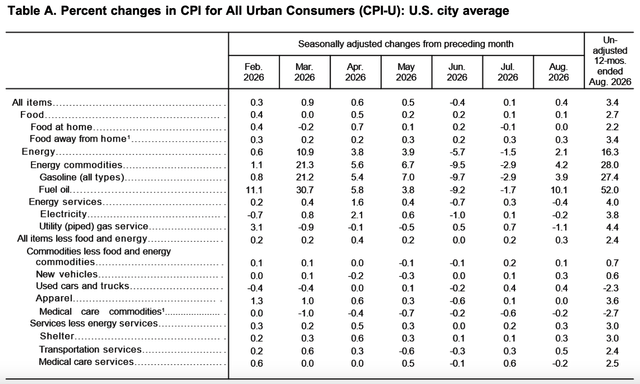
As you can see, the overall 3.4% year-over-year growth rate is overwhelmingly driven by the energy category, especially “fuel oil” at a 52% YoY growth rate. Nothing else jumps out as inordinately high or low.
And to be clear, the oil shock is basically a geopolitical shock.
Before the start of the Iran war, US crude oil prices hovered around $60 per barrel. Only because of the conflict, and the resulting constriction of the Strait of Hormuz, have oil prices surged.
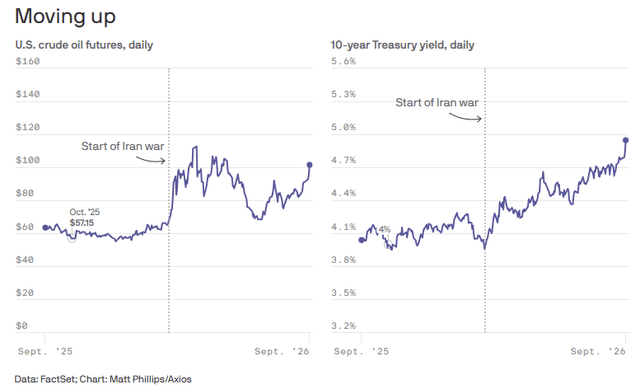
And, as you can see in the chart on the right above, it was only after this surge in oil prices that interest rates began soaring higher.
We do think that heavy bond issuance from hyperscalers has contributed to the increase in interest rates, but the primary catalyst of the recent upward trend was the war in Iran.
While we could go through each item of the CPI to demonstrate the lack of inflationary impulse, we will instead just focus on three broad categories that together account for the vast majority of the CPI index.
Food (Blue), Goods Ex. Food & Energy (Green), and Shelter (Red) YoY:
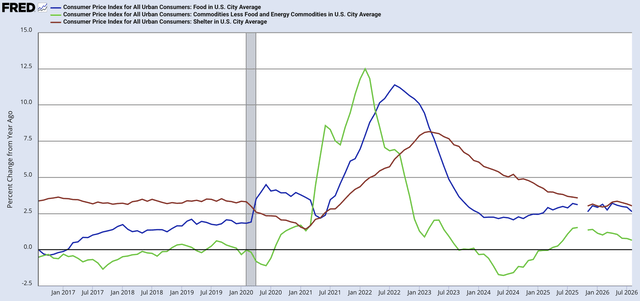
As you can see, food (groceries and restaurants), goods excluding food & energy (cars, furniture, appliances, apparel, medical products, etc.), and shelter/housing are all showing either stable or disinflationary patterns.
Housing definitely looks disinflationary, because the 50-year high in apartment deliveries over the last few years will take time to be fully absorbed. Until vacancy rates return to the mid-single-digits, rent growth will remain minimal.
After some price increases in the wake of the”Liberation Day” last year, the general goods category also seems to be cooling down.
Meanwhile, the food category is showing no upward inflection right now. With high gasoline prices, restaurants and food producers know that this is not the optimal time to hike their own prices.
Here’s another way to visualize the broad landscape of consumer price growth:
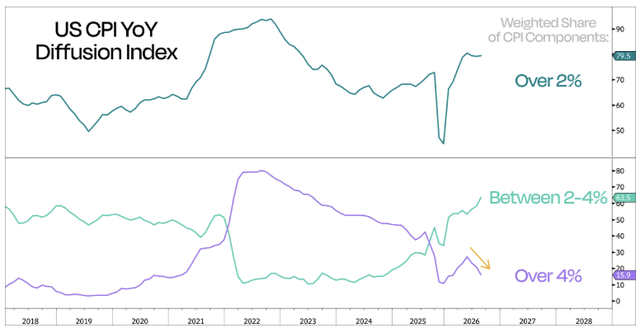
While the share of CPI components experiencing between 2-4% price growth has risen this year, the share of components experiencing over 4% price growth has recently been falling.
In other words, much of the growth in the 2-4% inflation category has come from components falling out of the >4% category.
It was normal before the pandemic for 50-60% of CPI components to have 2-4% price growth. The current share of 63.5% is only a bit above its pre-COVID average.
It would be worrisome if the share of CPI components experiencing >4% inflation was on the rise, as that would indicate a broad-based inflationary uptrend. That is not what we have today.
All signs point to the current inflationary surge being overwhelmingly fueled by oil prices.
While we cannot predict when the Iran conflict will end, we can state with high confidence that when it does, inflation will decline fairly quickly.
This bout of inflation certainly looks transitory.
Construction Pipeline Remains Constricted
On top of the likely transitory nature of the current inflationary environment, the commercial real estate market is experiencing something truly extraordinary: an outright collapse in the construction pipeline.
You might think we are exaggerating or using bombastic rhetoric here. We are not.
The level of total commercial real estate construction lending almost never declines by more than 0.5% outside of a recession. Even through the COVID-19 pandemic, it barely budged. But over the last few years, amid high interest rates and high construction costs, CRE construction lending has plunged:
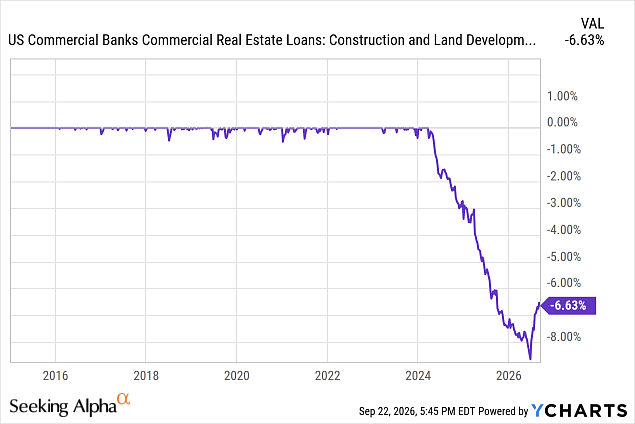
CRE lending being down 6.6% from its high may not sound impressive, but keep in mind this is based on a nominal number. When adjusted for inflation, the decline in CRE lending is much more significant.
Here’s another way to visualize the CRE construction pipeline, looking at the four traditional categories of CRE:
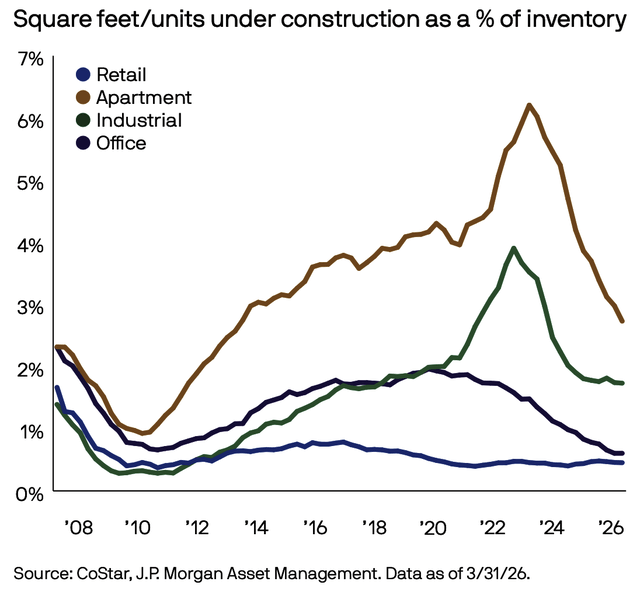
While development of retail space was already low, the declines in multifamily, industrial, and office construction have been extraordinary. It is rare to see this deep of a decline outside of a recession.
To be fair, the peaks in construction of apartments and industrial buildings in 2022-2023 were huge, and there was bound to be a reversion to the mean afterward. But the point is that the headwinds of excessive new supply have come to an end.
As long as tenant demand remains strong, most parts of CRE (with a few notable exceptions like lower-tier office buildings) will gradually recover going forward.
Here’s one more particularly striking example of a supply-demand mismatch. Right as the population growth of octogenarians begins to accelerate in the US, the development pipeline for senior housing has effectively stalled out.
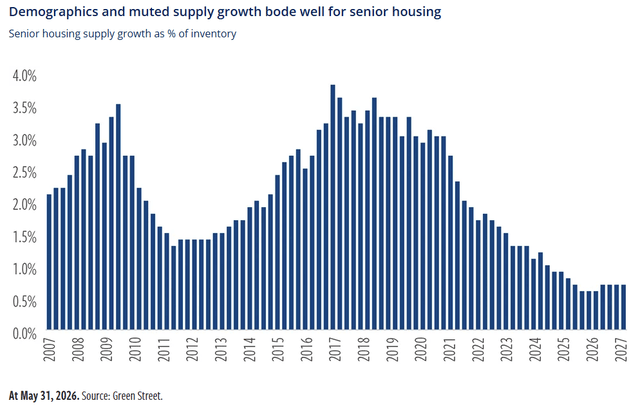
This is not for lack of enthusiasm among developers. It’s simply due to high interest rates and construction costs.
National average occupancy at senior housing has already surpassed 90%. The longer the supply pipeline remains constricted, the higher that percentage will go, which will allow operators to continue pushing up rent rates and entry fees. This, in turn, will allow senior housing REITs to maintain high organic growth rates for even longer.
While the market tends to price REITs as nothing more than bond proxies, these businesses actually abide by the economic laws of supply and demand just like any other.
That’s why analysts project a sharp uptick in cash flow growth for US REITs over the next several years.
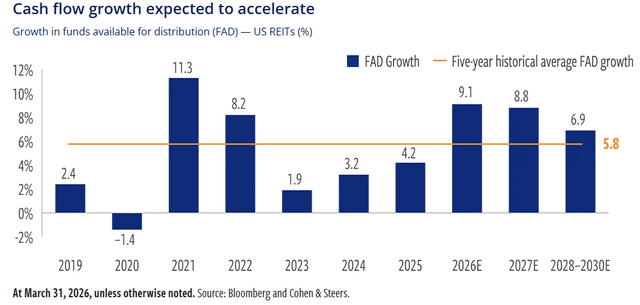
Yes, higher interest rates are a headwind. And that’s all the market seems to see when it comes to REITs.
But more than offsetting this headwind is the tailwind of a favorable supply-demand environment for at least the next 2-3 years. With every day that interest rates and diesel prices stay elevated, this runway of low supply growth extends longer.
A favorable supply-demand dynamic is more positive for REITs than rising interest rates are negative.
Some Attractive Buy-The-Dip Names
It is truly hard to pick just a few REITs to highlight right now, because many of them are attractive during this current dip.
But we think retail and senior housing offer particularly appealing supply-demand dynamics right now.
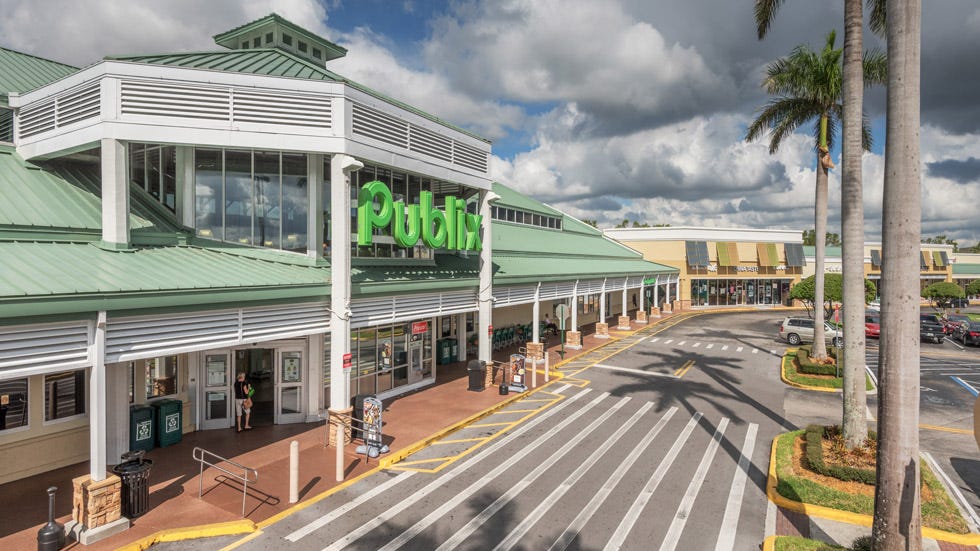
Retail looks attractive because there has been very little building in this sector since before the Great Financial Crisis of 2008-2009, while retail sales continue to grow.
In this space, we like Agree Realty (ADC) and Kimco Realty (KIM), both currently yielding about 5% and growing at a mid-single-digit pace.
Both REITs are trading below their 10-year average valuations.
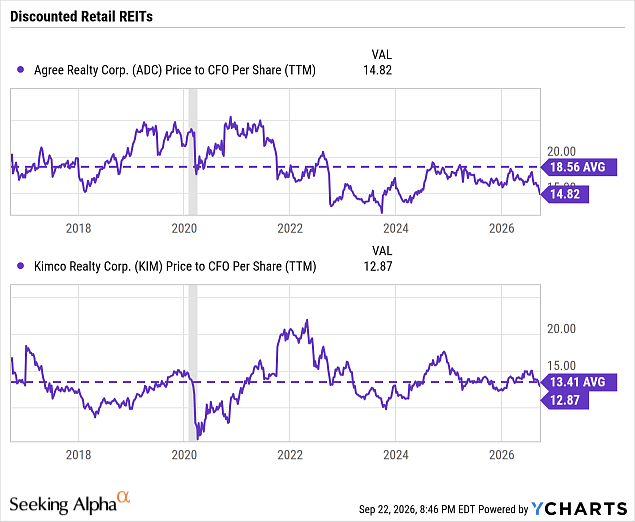
And yet, the supply-demand dynamics for retail real estate look superb.
Between 5% dividend yields and mid-single-digit growth, both REITs could conceivably generate double-digit total returns even without multiple expansion. But it is hard to believe that their valuations won’t rebound once the current oil-driven inflationary surge is over. Thus, we are confident both will deliver double-digit annual total returns.
And senior housing looks attractive because of unavoidable demographic realities: the population of 80+ year olds will grow indefinitely into the future. Meanwhile, senior housing construction remains muted. The next 2-3 years should be extremely favorable for organic growth in this industry.
Our pick in this space would be National Health Investors (NHI), which recently sold most of its skilled nursing facilities in order to concentrate its portfolio in senior housing real estate. Soon, about 1/4th of net operating income will derive from senior housing operating properties (”SHOP”), while roughly 80% will come from some form of private-pay senior housing.
For about two years from early 2024 through early 2026, NHI began to enjoy a higher valuation, but the recent selloff has driven its valuation back down below its 10-year average.
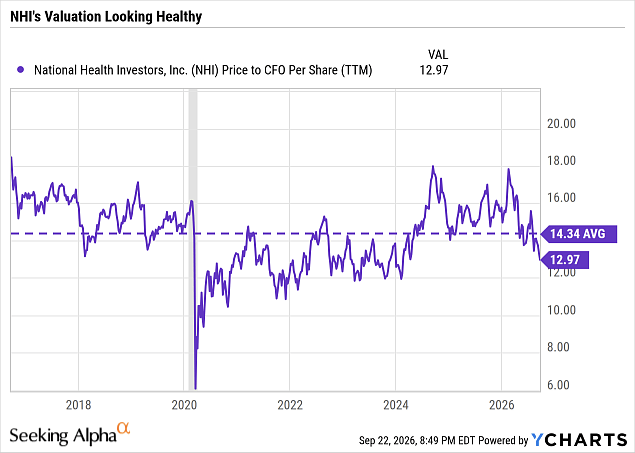
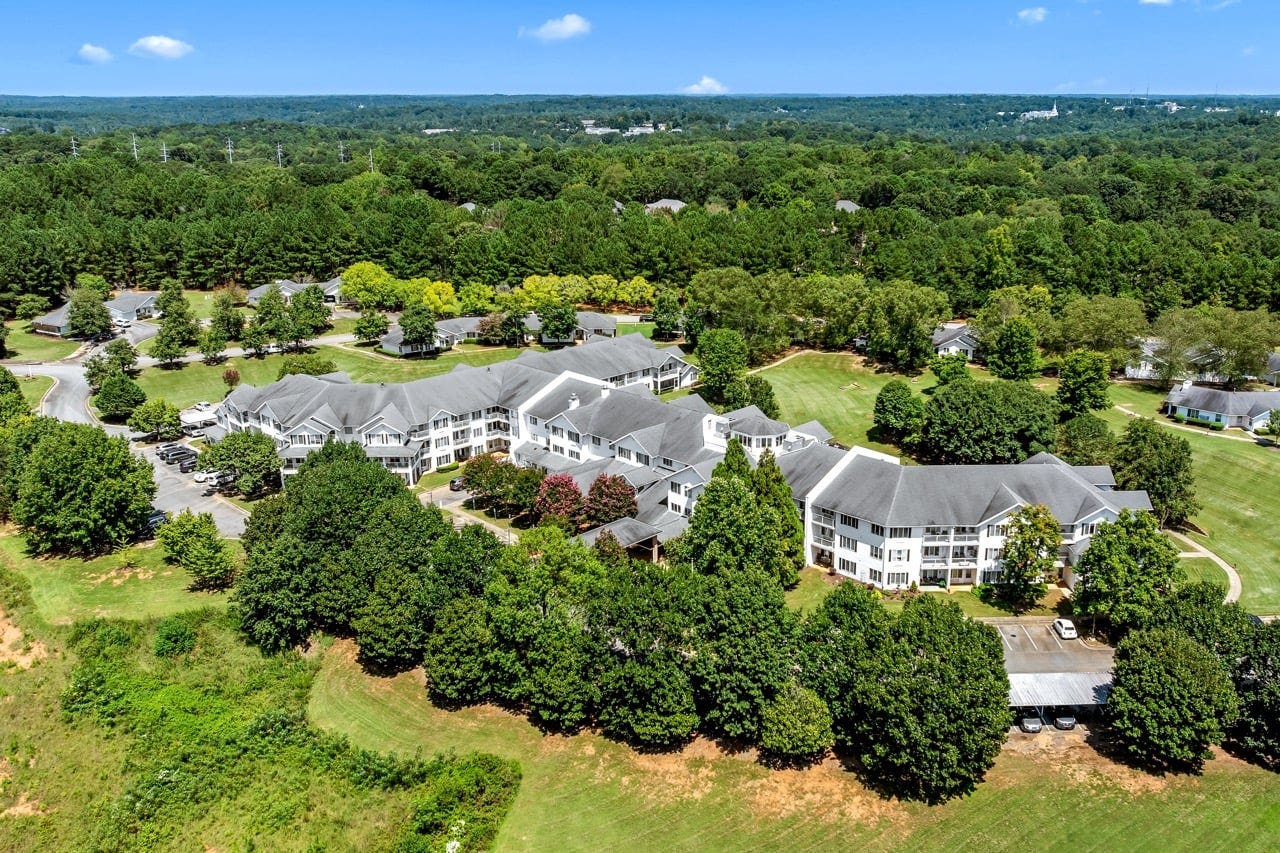
We think this is a great buy-the-dip opportunity, because this REIT should be able to produce mid- to high-single-digit FFO per share growth going forward.
The stock yields ~5.6%, and after the recent SNF portfolio sale, the balance sheet has been significantly deleveraged. Net debt to EBITDA has fallen down to the low-4x area.
Between a 5.6% yield and mid-single-digit growth, NHI could deliver double-digit total returns even without multiple expansion. But again, given the superb supply-demand dynamics in the senior housing space, it is inconceivable that NHI’s valuation would remain depressed below its long-term average like this.
With a reversion to its mean valuation, NHI could deliver annual total returns in the mid-teens.
Finally, please note that we have exceptionally posted this article without a paywall. If you found it valuable, consider joining High Yield Landlord for a 2-week free trial.
We expect to share a Trade Alert with our paid members tomorrow, and by starting your free trial today, you will also gain access to it. You will also get immediate access to my entire REIT portfolio, our exclusive REIT CEO interviews, and much more. We are the largest and highest-rated REIT investment newsletter online, with over 2,000 paid members and more than 500 five-star reviews.
We spend thousands of hours and over $100,000 per year researching the market for the most profitable investment opportunities, and we share the results with you at a tiny fraction of the cost.
Get started today - the first 2 weeks are on us:
Analyst’s Disclosure: I/we have a beneficial long position in the shares of all companies held in the CORE PORTFOLIO, RETIREMENT PORTFOLIO, and INTERNATIONAL PORTFOLIO either through stock ownership, options, or other derivatives. We also own a position in FarmTogether. High Yield Landlord® (’HYL’) is managed by Leonberg Research, a subsidiary of Leonberg Capital. All rights are reserved. No recommendation or advice is being given as to whether any investment is suitable for a particular investor. The newsletter is impersonal and subscribers/readers should not make any investment decision without conducting their own due diligence, and consulting their financial advisor about their specific situation. The information is obtained from sources believed to be reliable, but its accuracy cannot be guaranteed. The opinions expressed are those of the publisher and are subject to change without notice. We are a team of five analysts, each contributing distinct perspectives. Nonetheless, Jussi Askola, the leader of the service, is responsible for making the final investment decisions and overseeing the portfolio. We do not always agree with each other, and an investment by Jussi should not be taken as an endorsement by other authors. Past performance is no guarantee of future results. Our portfolio performance data is provided by Interactive Brokers and believed to be accurate but its accuracy has not been audited and cannot be guaranteed. Our portfolio may not be perfectly comparable to the relevant index. It is more concentrated and may at times use margin and/or invest in companies that are not typically included in REIT indexes. Finally, High Yield Landlord is not a licensed securities dealer, broker, US investment adviser, or investment bank. We simply share research on the REIT sector.