



I recently attended the EPRA ReThink Conference in Milan, one of the biggest annual gatherings of real estate companies and institutional investors in Europe.
I already shared my main takeaways from my one-on-one interview with Realty Income (O) CEO Sumit Roy. You can read it by clicking here.
But there were several other interesting takeaways from the conference that I wanted to discuss. I met with and listened to the management teams of a number of European real estate companies and also had the opportunity to exchange views with several large institutional REIT investors.
Here are some of the most interesting points:
Vonovia
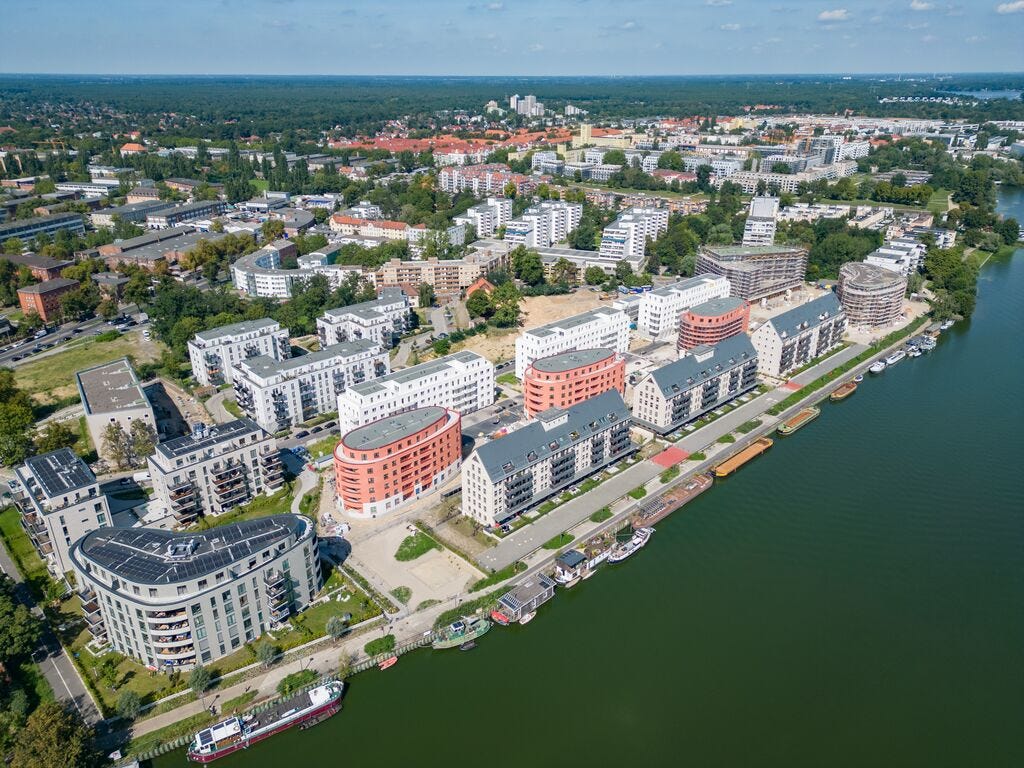
Vonovia (VNA / VONOY) is one of our largest European real estate investments, and there were three main takeaways that strengthened my conviction in the company.
Vonovia’s low property yields make more sense than they initially appear.
One of the biggest points of skepticism surrounding Vonovia is its net asset value. Its EPRA NTA was €46.22 per share at the end of June, compared to a share price of just €17.17 as of September 25. This means that its shares are today priced at roughly a 63% discount to their reported net asset value.
A lot of investors are reluctant to give much credit to this NAV because Vonovia’s properties are valued at extremely low yields. In fact, the number is even lower than I had remembered: Vonovia reported a 3.9% net initial yield for its real estate portfolio at the end of 2025.
A 4% property yield sounds incredibly low if you compare it with an apartment REIT in the U.S. or most other property sectors.
But I think that this comparison misses what makes German residential real estate so unusual.
Germany has a severely undersupplied housing market and rents are heavily regulated. Its vacancy rate was just 2.3% in the first half of the year and its rents grew by another 3.6% organic over the past year, with its German in-place rents rising from €8.05 to €8.32 per square meter.
The important point is that these rents remain well below what an unconstrained market would charge. Therefore, the company has a very long runway to gradually grow rents within the limits of German regulation.
So you aren’t simply buying an asset yielding 4%.
You are buying something closer to an inflation-protected bond where the starting yield is low, but the cash flow is exceptionally defensive and has a very predictable path to continued 3-4% annual growth.
This is very different from a market in which rents can surge 15% one year, developers respond by flooding the market with new supply, and rents then decline during the next downturn.
That distinction gave me greater confidence in Vonovia’s reported property values. The implied yields are low, but there are good reasons why private investors are willing to accept them. Housing is a lower-risk asset class in Germany than elsewhere in the world because it is severely undersupplied and lease rates are deeply below what they would be in a free market. This explains why rents continued to rise in Germany even during the Great Financial Crisis and the pandemic.
The Berlin election has now taken place, and the political risk has clearly increased, but the economic implications are still more complicated than the headlines suggest.
