We are buying more VICI Properties (VICI) for the Retirement Portfolio and will continue to grow our currently small position into a larger one.

The trigger for this trade alert is simple: VICI just hiked its dividend again, pushing its dividend yield to a historically high 7.2%.
The hike itself was not substantial at 2.2%, but the message behind it matters far more than the size of the increase.
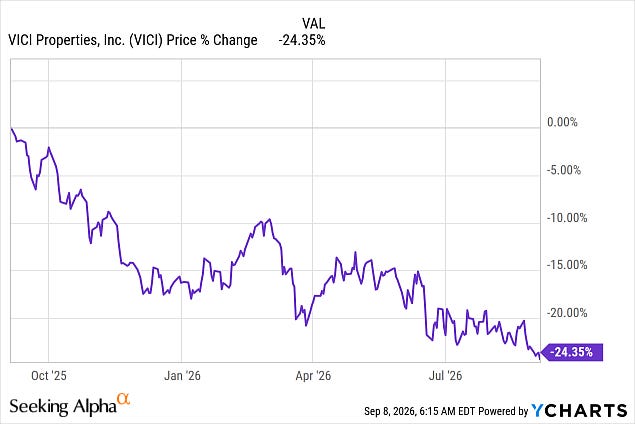
Over the past months, VICI’s share price has steadily drifted lower due to tenant-related fears.
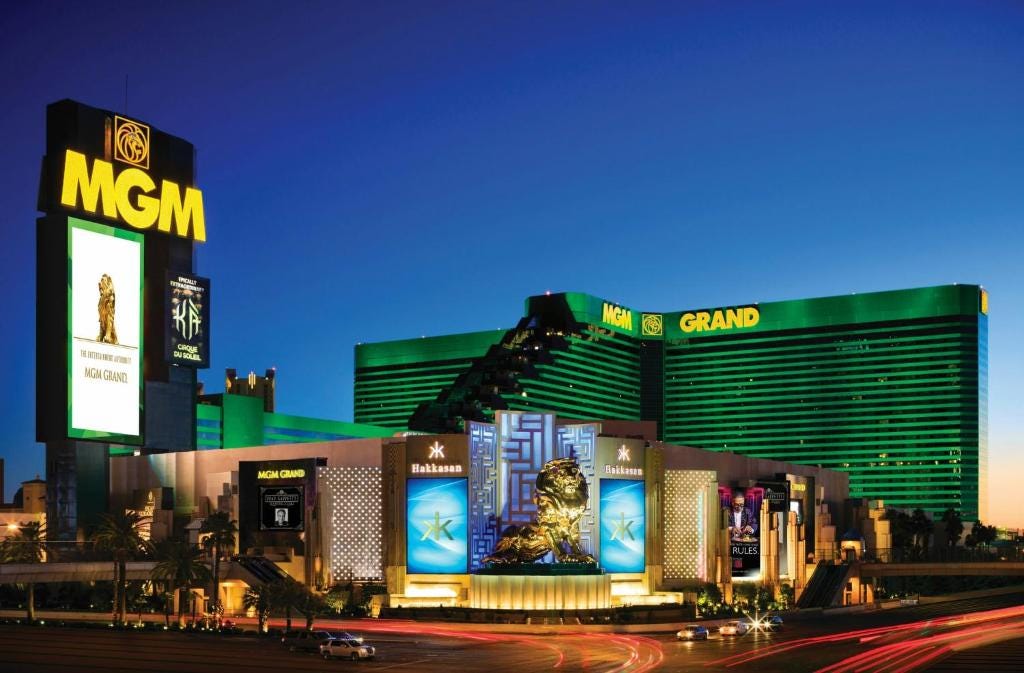
First, the market became worried about the Caesars regional lease. Then came concerns about Caesars and MGM potentially going private, and what this could mean for VICI’s future rent payments.
Yet, despite all these fears, VICI has kept growing steadily, reaffirmed its full-year guidance, and now hiked its dividend.
To us, this sends a clear signal: management is not seeing the level of stress that the market appears to be pricing in. If they were seriously worried about a near-term hit to cash flow or the sustainability of the dividend, they likely would not be raising it today.
Why The Market Is Worried
There are two main concerns weighing on VICI.
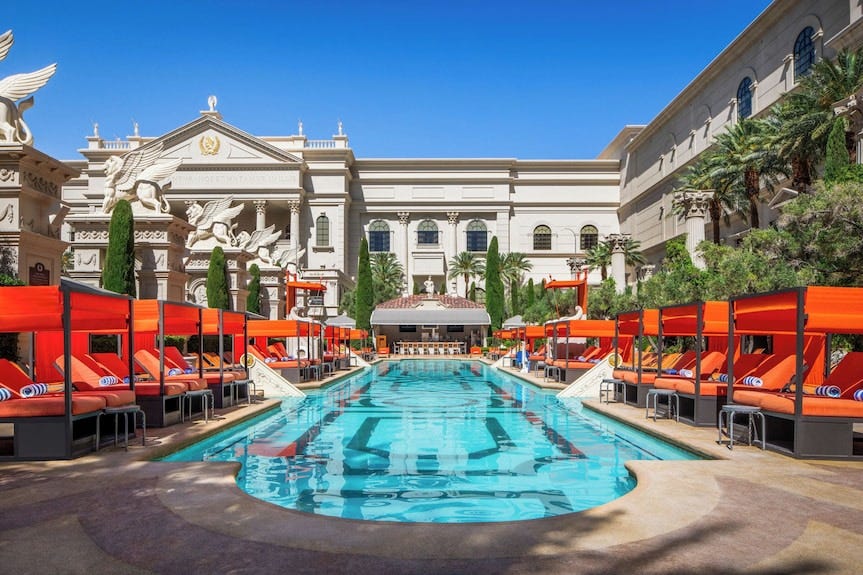
The first is the Caesars regional lease, which represents about 22% of VICI’s rental income. Rent coverage has declined, and the market fears that this could eventually lead to a rent cut.
This is a real risk, but we think it is manageable. The lease still has nearly 10 years of remaining term, plus four additional 5-year extension options. Caesars cannot simply walk away from it unless it goes bankrupt, and VICI made it clear to us that it would not agree to any rent cut unless it received something of equal value in return.
We met with VICI’s CEO and CFO in person this summer in New York City and discussed this exact topic in detail. Our takeaway was that management is aware of the issue, but does not view it as an existential problem. If there is ever a negotiation, we would expect it to be structured as a win-win solution, potentially involving asset sales, tenant diversification, or other concessions that compensate VICI.
Even in a downside case, the impact would likely be manageable. If a lease representing 22% of rent were cut by 20%, that would reduce total rent by roughly 4%. That is not ideal, but it is also not a disaster, especially when VICI’s other leases have built-in rent escalators, and the company retains substantial cash flow for growth.
The second concern is that Caesars and MGM could potentially go private, reducing public market visibility into VICI’s biggest tenants.
Again, we understand why the market dislikes that. REIT investors prefer transparent, publicly listed tenants, especially when tenant concentration is high.
But we actually view these potential transactions as a net positive. If sophisticated casino operators are willing to put billions of dollars into these businesses, it validates the quality of VICI’s real estate and the value of its long-term leases. Private ownership may also allow these operators to think longer term, invest more heavily in their properties, and potentially create more value over time.
It could also accelerate tenant diversification if overlapping assets need to be sold to satisfy regulators.